Recommendations for Traditional Literature
4th/5th Grade Students
4th/5th Grade Students
"Theories on the origin of traditional literature
abound with little agreement other than that it is the literature of the human
imagination. The stories entertain,
kindle the imagination, add to our language, and lay the groundwork for
understanding all literature."
FAIRY TALES
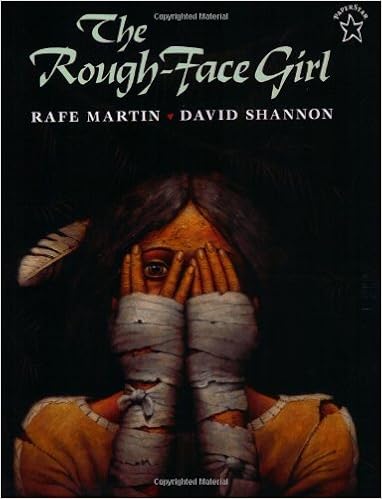
The Rough-Face Girl
Interest Level: 3-5
Grade level equivalent: 5.5
Lexile Measure: AD504L, DRA: 40, Guided Reading: S
Interest Level: 3-5
Grade level equivalent: 5.5
Lexile Measure: AD504L, DRA: 40, Guided Reading: S
From Algonquin Indian folklore comes one of the most haunting, powerful versions of the Cinderella tale ever told.
In a village by the shores of Lake Ontario lived an invisible being. All the young women wanted to marry him because he was rich, powerful, and supposedly very handsome. But to marry the invisible being the women had to prove to his sister that they had seen him. And none had been able to get past the sister's stern, all-knowing gaze.
Then came the Rough-Face girl, scarred from working by the fire. Could she succeed where her beautiful, cruel sisters had failed? (Amazon)
In a village by the shores of Lake Ontario lived an invisible being. All the young women wanted to marry him because he was rich, powerful, and supposedly very handsome. But to marry the invisible being the women had to prove to his sister that they had seen him. And none had been able to get past the sister's stern, all-knowing gaze.
Then came the Rough-Face girl, scarred from working by the fire. Could she succeed where her beautiful, cruel sisters had failed? (Amazon)

Lexile Framework: 500L
Grade Level Equivalent: 2.7
Guided Reading Level: U
Age: 11-13
Rapunzel escapes her tower-prison all on her own, only to discover a world beyond what she'd ever known before. Determined to rescue her real mother and to seek revenge on her kidnapper would-be mother, Rapunzel and her very long braids team up with Jack (of Beanstalk fame) and together they perform daring deeds and rescues all over the western landscape, eventually winning the justice they so well deserve. This is one of my all time favorite graphic novels because it takes the fairy tale of Rapunzel and turns it into an amazing story for helping to empower girls.
FOLKTALES
Mufaro's Beautiful Daughters
Reading Level: 5.2
Grade level equivalent: K-2
Guided Reading: N, Lexile Framework: 720L
Reading Level: 5.2
Grade level equivalent: K-2
Guided Reading: N, Lexile Framework: 720L
This is the tale of Mufaro's two daughters, two beautiful girls who react in different ways to the king's search for a wife - one is aggressive and selfish, the other kind and dignified. The king takes on disguises to learn the true nature of both girls and of course chooses Nyasha, the kind and generous daughter, to be his queen. (Amazon)

Anansi the Spider
Lexile Framework: 290L, Guided Reading: L
Grade Level Equivalent: 3.2
One of the great folk heroes of the world... He is a rogue, a mischief maker, and a wise, lovable creature who triumphs over larger foes.
Lexile Framework: 290L, Guided Reading: L
Grade Level Equivalent: 3.2
One of the great folk heroes of the world... He is a rogue, a mischief maker, and a wise, lovable creature who triumphs over larger foes.
In this traditional Ashanti tale, Anansi sets out on a long, difficult journey. Threatened by Fish and Falcon, he is saved from terrible fates by his sons. But which of his sons should Anansi reward? Calling upon Nyame, the God of All Things, Anansi solves his predicament in a touching and highly resourceful fashion.
In adapting this popular folktale, Gerald McDermott merges the old with the new, combining bold, rich color with traditional African design motifs and authentic Ashanti language rhythms.
Anansi the Spider is a 1973 Caldecott Honor Book. (Amazon)

Tar Beach
Grade Level Equivalent: 2.9
Lexile Measure: AD790L, DRA: 38, Guided Reading: P
"Ringgold recounts the dream adventure of eight-year-old Cassie Louise Lightfoot, who flies above her apartment-building rooftop, the 'tar beach' of the title, looking down on 1939 Harlem. Part autobiographical, part fictional, this allegorical tale sparkles with symbolic and historical references central to African-American culture. The spectacular artwork resonates with color and texture. Children will delight in the universal dream of mastering one's world by flying over it. A practical and stunningly beautiful book." (Goodreads)
Abiyoyo
Grade Level: 3.2
Lexile: 610L, DRA: 34, Guided Reading: O
Grade Level: 3.2
Lexile: 610L, DRA: 34, Guided Reading: O
No one wants to hear the little boy play his ukelele anymore...Clink, clunk, clonk. And no one wants to watch his father make things disappear...Zoop! Zoop!
Until the day the fearsome giant Abiyoyo suddenly appears in town, and all the townspeople run for their lives and the lives of their children! Nothing can stop the terrible giant Abiyoyo, nothing, that is, except the enchanting sound of the ukelele and the mysterious power of the magic wand. (Amazon)
Until the day the fearsome giant Abiyoyo suddenly appears in town, and all the townspeople run for their lives and the lives of their children! Nothing can stop the terrible giant Abiyoyo, nothing, that is, except the enchanting sound of the ukelele and the mysterious power of the magic wand. (Amazon)
LEGENDS

Other Traditional Literature Favorite...

The Mitten String
Grade level Equivalent: 3.2
Lexile® Measure: 800L
DRA: 24
Guided Reading: M
An original Jewish folktale about a girl who knits, a deaf woman, and a piece of blue yarn.
When her family invites a deaf woman and her baby to stay, Ruthie, a talented knitter of mittens, wonders how the mother will know if her child wakes in the night. The surprising answer inspires Ruthie to knit a special gift that offers great comfort to mother and baby—and to Ruthie herself.
With language and imagery reminiscent of stories told long ago, this modern Jewish folktale will resonate with those who love crafts, anyone who’s encountered someone with physical differences—and with everyone who has ever lost a mitten in the depths of winter.
When her family invites a deaf woman and her baby to stay, Ruthie, a talented knitter of mittens, wonders how the mother will know if her child wakes in the night. The surprising answer inspires Ruthie to knit a special gift that offers great comfort to mother and baby—and to Ruthie herself.
With language and imagery reminiscent of stories told long ago, this modern Jewish folktale will resonate with those who love crafts, anyone who’s encountered someone with physical differences—and with everyone who has ever lost a mitten in the depths of winter.
Other Traditional Literature Favorite...
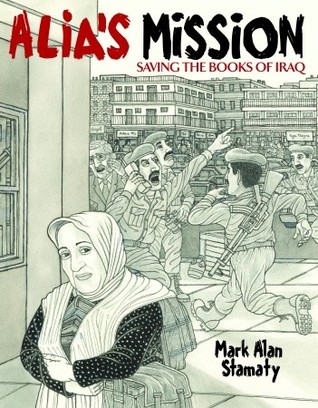
Alia's Mission
Interest level: grades 3-5
Reading Level 3.9
Lexile Measure: 850L
The inspiring story of an Iraqi librarian's courageous fight to save books from the Basra Central Library before it was destroyed in the war.
It is 2003 and Alia Muhammad Baker, the chief librarian of the Central Library in Basra, Iraq, has grown worried given the increased likelihood of war in her country. Determined to preserve the irreplacable records of the culture and history of the land on which she lives from the destruction of the war, Alia undertakes a courageous and extremely dangerous task of spiriting away 30,000 books from the library to a safe place.
Told in dramatic graphic-novel panels by acclaimed cartoonist Mark Alan Stamaty, Alia's Mission celebrates the importance of books and the freedom to read, while examining the impact of war on a country and its people. (Goodreads)
Interest level: grades 3-5
Reading Level 3.9
Lexile Measure: 850L
The inspiring story of an Iraqi librarian's courageous fight to save books from the Basra Central Library before it was destroyed in the war.
It is 2003 and Alia Muhammad Baker, the chief librarian of the Central Library in Basra, Iraq, has grown worried given the increased likelihood of war in her country. Determined to preserve the irreplacable records of the culture and history of the land on which she lives from the destruction of the war, Alia undertakes a courageous and extremely dangerous task of spiriting away 30,000 books from the library to a safe place.
Told in dramatic graphic-novel panels by acclaimed cartoonist Mark Alan Stamaty, Alia's Mission celebrates the importance of books and the freedom to read, while examining the impact of war on a country and its people. (Goodreads)

